Tuning Into Your Breath
As a person with “adult-onset, intermittent asthma,” I have become painfully aware of how important the breath is, and how barely anyone is breathing properly anymore. The great part about athletics, musical instruments, and performance is that the breath is knitted into the learning of those skills. For many of us, though, we don’t think about our breath until there is an emergency.
I took my newfound adult asthma lightly until I was on a hike with my husband in Griffith Park. It wasn’t an intense hike at all, but suddenly I could not catch my breath, and I had left my asthma inhaler at home. We flagged down a park ranger and asked him to drive us the short drive home so I could get relief. All I remember, as I was gasping for air, was him saying, “I’m not supposed to leave the park!” I carry my inhaler with me at all times to this day.
I can't coach someone on speaking and communicating under pressure without addressing the importance of the breath. In the last newsletter, I focused on tuning in to the environment you are in. Now, let’s tune in to the body you inhabit and the breath that, without it, you would cease to be. How’s that for motivation? Your breath is your ally. It powers everything. It calms your nervous system. It can calm your mind. It powers your voice. It’s how your presence is felt by others. Every day, connect to your breath with intention.
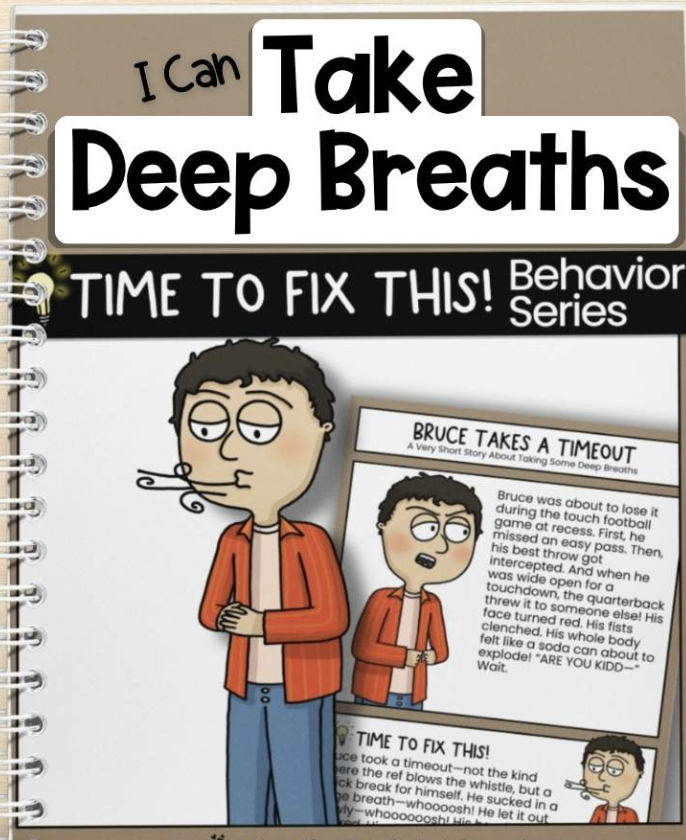
Nerves of Breathing:
If you rhythmically inhale to 5 and exhale to 5, neurons in the brain that are related to breathing are stimulated.
Inhaling collects the information sent via the Vagus nerve to the brain,
Exhaling sends information back down to the heart, lungs, and abdomen.
Deep, slow exhales signal the Vagus nerve that the heart needs less oxygen, and our heart rate slows, relaxing us. This is the neuron connected to the part of the brain that squirts cortisol, so when you rhythmically breathe, it tells that part of the brain to stop squirting. Athletes and performers all know that exhaling calms them down. Exhaling will disrupt the adrenaline-cortisol system. Anxiety is a chemical reaction; we call it “I’m nervous, I’m anxious,” but that’s an abstraction. When that part of your brain squirts adrenaline and cortisol into your blood system, it's because you’ve made a conscious or unconscious decision that this is "a big deal moment." The moment can be in speaking 1:1 or 1:Many. It can be a moment when you are afraid you might forget what you want to say, and then your brain releases cortisol and adrenaline, and you have a nervous reaction.
It will take seven minutes for cortisol to leave the bloodstream. The chemical reaction can be controlled in multiple ways, and the Box Breath is one way to start calming that center.
Find the Belly &-Mid-back Breath:
Either lie down, or if you are sitting, think “ears over hips.” When you inhale, the belly should go out at the same time as the back, where a bra strap sits, expands. Take 3-5 nice, deep breaths.
Box Breath: After you find your Belly & Mid-back Breath, do Box Breath.
Inhale to the count of 4.
Hold your Breath at the top of the count of 4.
Exhale to the count of 4.
Hold your Breath at the bottom of the count
Harness the art of exhalation:
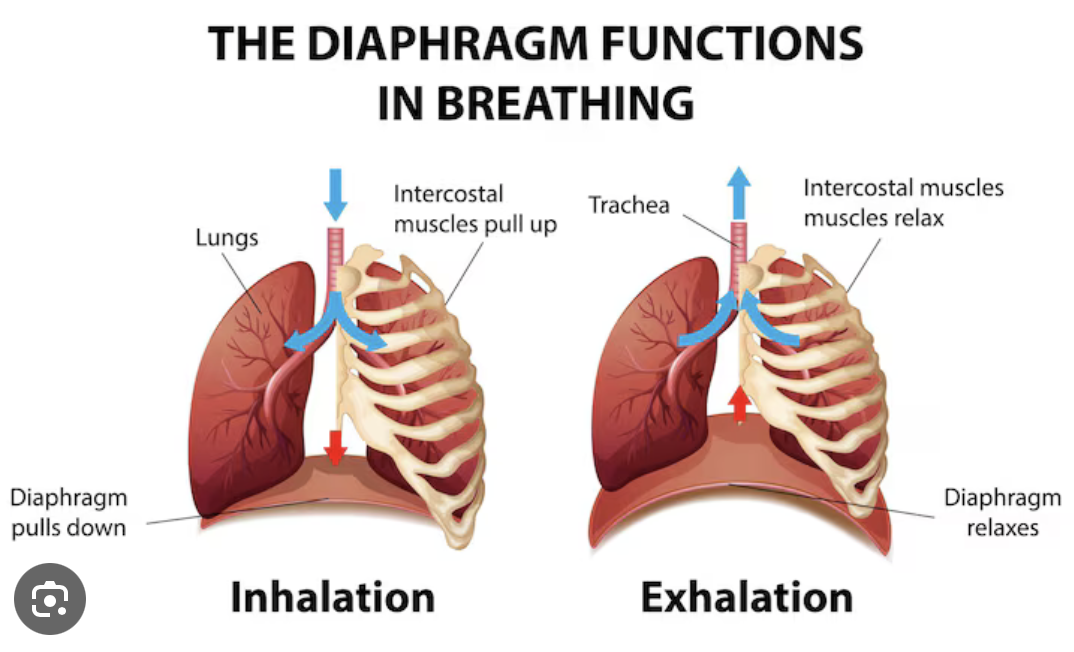
The outward movement of air created by exhalation helps the vocal cords do their work. Your belly will float out as you inhale and float in as you exhale. Let your breath move your body. Hum on exhaled air as the belly floats in. Control the exhaled air as you would a balloon you are holding, slowly letting the air out.
The diaphragm is called our Second Heart:
The diaphragm acts as a powerful pump that aids circulation, especially during deep breathing or exercise. It creates pressure changes in the abdomen and chest that help return venous blood to the heart, reducing the workload on the heart muscle, supporting lymphatic flow, and boosting cardiovascular efficiency.
"Second Heart" Distinction:
While the calf muscle is frequently called the "second heart" for pumping blood up from the legs (which is why we must stretch our calf muscles more!), the diaphragm operates as a "second heart" for the internal organs, blood vessels, and thoracic cavity. When we use diaphragmatic breathing, we maximize this "pump" effect, significantly increasing circulation compared to shallow chest breathing.
Lungs and Weight Loss:
I’m tossing this in here because I think it’s fascinating. Saying "the lungs are the body's weight-regulating system" means the lungs are the primary organ responsible for excreting the mass lost when a person loses weight. When body fat is burned for energy, it is converted into carbon dioxide and water; the vast majority of that fat (roughly 84%) is exhaled through the lungs as CO2.
If you feel you spend most of your days holding your breath or breathing shallowly, your exhales can improve! I’ve been doing the following exercise for a while now, and it’s been helpful to track exhale progress.
Carl Stough Exhale Exercise: From Breathe by James Nestor
This technique helps engage more diaphragmatic movement and increase respiratory efficiency. It should never be forced; each breath should feel soft and enriching.
Sit up so the spine is straight and the chin is perpendicular to the body.
Take a gentle breath through the nose.
At the top of the breath, begin counting
softly aloud from one to 10 over and over (1,2,3,4,5,6,7,8,9,10,1,2,3,4,5,6,7,8,9,10, etc.)
As you reach the natural end of the exhale, keep counting, but do so in a whisper, letting the voice trail off softly. Then, keep going until only the lips are moving and the lungs feel empty.
Take in another large, soft breath, and repeat.
Continue for anywhere from 10-30 more cycles. (keep track - maybe each day, add 1 more cycle until you get up to 30 cycles)
Once you feel comfortable with this sitting position, try it while walking, jogging, or doing other light exercises.

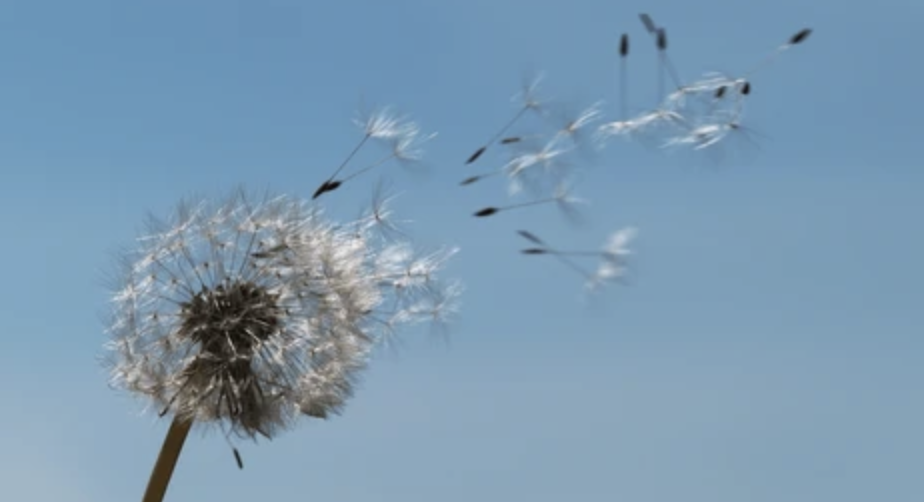
Notice that nature’s breath can be a breeze, a wind, a gust, and it keeps things moving.
Ongoing breath check-ins throughout your day can transform your life.
One breath at a time.
Focus your attention and acquaint yourself thoroughly with your greatest ally, the one who has been there from the very beginning,
the one who greeted you the moment you exited the watery womb,
the only one you really, truly, cannot live without.
Your breath.
-Mick Kubiak