Your Internal Pit Crew
Our minds are incredible. When everything is firing and clear, we can connect at our highest level. Some of us identify with having different parts of ourselves, either on board with talking in front of groups, large or small, or battling it out internally.
I feel like my internal state is 50/50. Half of me is on board and wants to lead workshops, and the other half is quite content to observe or maybe sit by a fire, reading a good book.
When I’m nervous before a talk, I need all parts of me on board and working together. I know too well when I’ve dragged my introverted self into another situation that they would like to dispute.
I recently saw a pit crew at work and thought, "Yes!” That’s when things are good – when my internal pit crew is working in harmony toward a shared goal. My internal parts all have a different part to play, and everyone is needed.
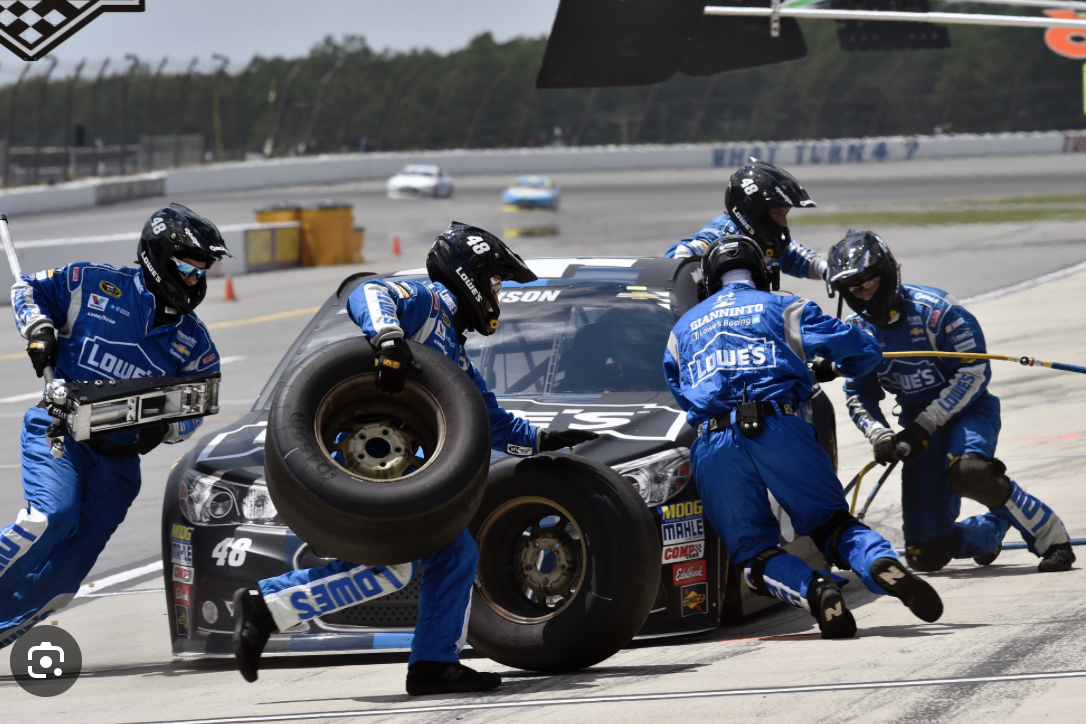
The Pit Crew:
A pit crew's job is to service a race car rapidly during a pit stop, performing essential tasks like changing tires, refueling, and making quick mechanical or aerodynamic adjustments to keep the car competitive, all within seconds. They are highly trained athletes in specific roles, moving with choreographed precision to minimize time off track.
Your Internal Pit Crew:
Your internal pit crew’s job is to service you rapidly as you are prepping and in the middle of talking with a group (large or small). Changing direction as needed, making sure you are properly fueled with food (and apple juice for cotton mouth), and making quick adjustments to keep you clear and connected to your listeners.
Pit Crew Key Roles & Tasks:
Tire Changers/Gunners: They are masters of speed, working with other crew members (tire carriers, jack men) to complete the entire tire change in just a few seconds.
Your Inner Gunners are your Cerebellum: Often called the "little brain," it's crucial for motor control, coordinating complex and rapid movements, maintaining balance, and learning skilled activities like dancing or playing sports.
Tire Carriers: They are crucial for speed, carrying two tires at a time and hustling to get old ones back to avoid penalties, requiring immense power, agility, and precision.
Your Internal Tire Carriers are Your Frontal Lobes:
Motor Cortex: Plans, controls, and executes voluntary movements.
Prefrontal Cortex: Involved in higher functions like planning and complex thought, becoming more efficient with practice.
Jackmen: The Jackmen act as a critical link in the choreographed stop.
Your Internal Jackmen are your Neural Networks: The speed at which tasks are processed depends on how organized these networks are, becoming denser and faster with repeated execution. Communication occurs when a neuron sends an electrical signal down its axon to another neuron at a synapse, using chemical messengers called neurotransmitters. These pathways are the "wires" that allow different brain regions to coordinate functions like thought, movement, and emotion.
Fueler (NASCAR/IndyCar): Pumps fuel into the car.
Your Inner Fuel can mean literal food AND food for thought. Listening to yourself and others so you are responding in the moment to your listeners.
Stabilizers (F1): Hold the car steady on the sides, often while also wiping the driver's visor or clearing debris.
Your Stabilizers are your breath, feet, and core muscles.
Your breath expands the back of your ribs and belly. You must inhale between sentences and speak on the exhale.
Your feet. Standing on your feet, balanced on both.
Your posture. Sitting up with your feet on the floor and your spine up. These are the straight lines of your presence.
Front Wing Adjusters (F1): Use tools to turn threaded mechanisms on the front wing's endplates, changing the flap's angle (Angle of Attack) to modify front aerodynamic balance and grip during a race, responding to driver or engineer requests for more or less front downforce to correct understeer or oversteer.
Your Front Wing Adjusters: Are your eyes, voice, face, and gestures all in service to the listener, helping you transfer your expression to your listener's mind (that matches the message) = congruence. Your eyes connect with one listener at a time. No glancing around the room, which stresses out your nervous system and is NOT how you are wired. Line up with one listener at a time. 1-3 sentences to their mind, then switch. Etc. It’s a connected, organized system if you let it be.
How They Work Together:
For a fast, efficient action, the frontal lobes initiate the plan, while the cerebellum fine-tunes the coordination and timing of muscle movements, ensuring they are smooth and precise. The more you practice, the more efficient these neural pathways become, allowing for quicker execution.
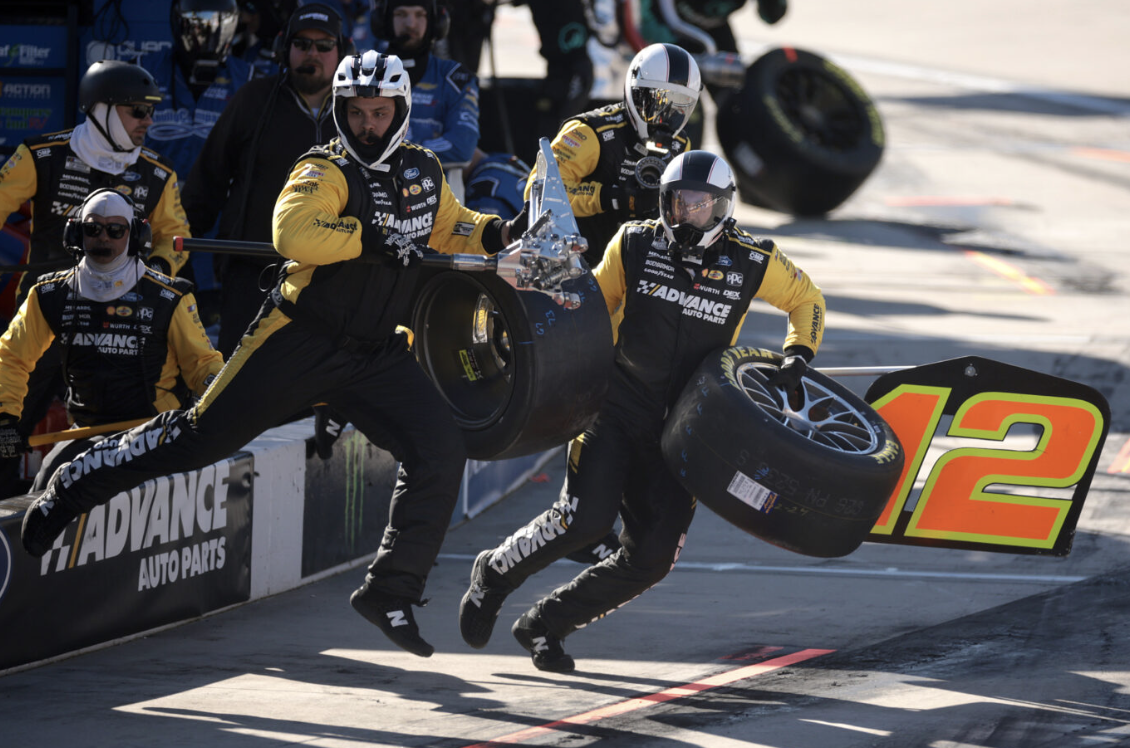
Why a Pit Crew is Crucial:
• Time is Everything: Seconds saved in the pit can mean gaining positions on the track, influencing the race outcome.
• Precision & Safety: Extreme coordination prevents errors, like wheels falling off or drivers overshooting, which can cause major accidents.
• Teamwork: The entire crew functions as a unit, with roles perfectly synchronized, treating their work like a sport requiring intense practice.
Your Internal Pit Crew (IPC) is crucial for reading the room, adjusting as needed, connecting with your listeners, and getting all your parts on board, allowing you to transfer your message into your listeners’ minds and have an impact in the room.
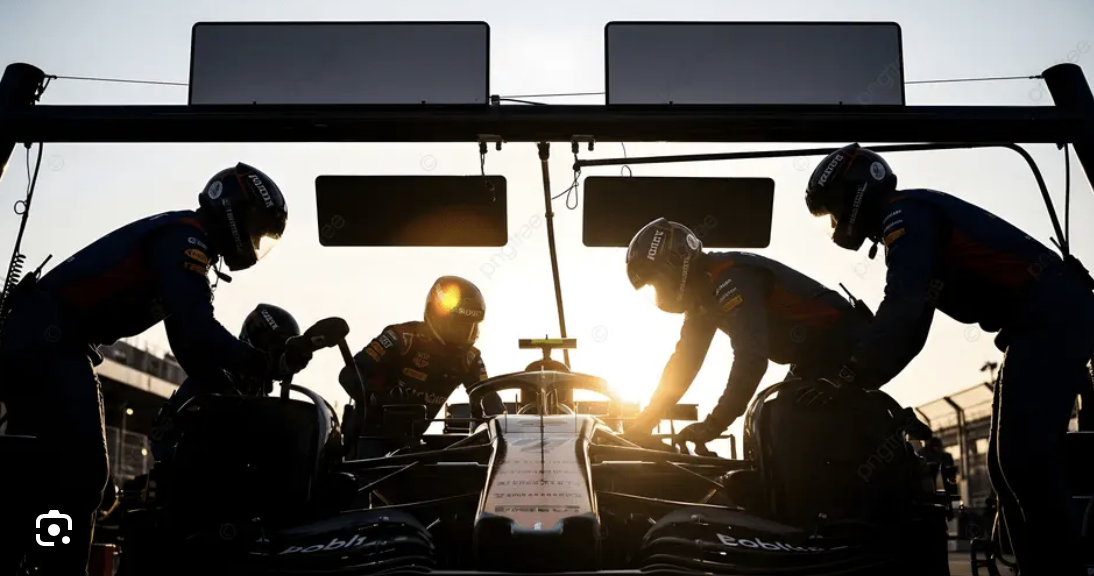
Other Key Players:
Data Acquisition Engineer: Maintains the data acquisition system, ensures all sensors are calibrated and well-functioning, and analyzes data. Located on the pit box.
Your DAE is _______________?
Race Strategist: Calls race and pit strategy for the team. Communicates with the driver via radio during the race. Located on the pit box.
Your strategist is ___________?
Race Engineer: Oversees the running of the car, including what to adjust during pit stops to maximize performance. Located on the pit box.
Your engineer is ________________?
Spotter: The spotter is the driver’s eyes in the sky and the voice that guides around the racetrack. Positioned above the racetrack, the spotter communicates with the driver via radio to inform the driver of on-track incidents, not to pass opportunities, and more. Located on the spotters’ stand above the grandstands.
When your Spotter is out of balance, leading and controlling rather than guiding, you are not 100% in the car.
Notice that in the Pit Crew, these essential responsibilities are shared. Most of us have no idea that our DAE, strategist, engineer, and spotter are all lumped into one, and this is often the part of us that takes over. However, no one ever left Nascar saying, “That Data Acquisition Engineer crushed it!” “That strategist really moved me.” These critical functions are ideally invisible to your listener, yet essential to your impact. We will call this your Self 1.
Effortless Concentration:
These other Key Players are in your head and either helping you connect or hindering your impact.
When you are talking, you want to be conscious and aware of everything that is happening, but not overthink or overtry.
How can you be consciously unconscious? A better way to describe it might be a mind that is so concentrated, so focused, that it is still. It becomes one with what the body is doing, and the unconscious automatic functions work without interference from thoughts. The concentrated mind has no room for thinking about how well things are going. In this state, there is little to interfere with the full expression of connecting and creating. This is the art of effortless concentration.
What disrupts this effortless concentration is that we have two selves inside each of us. You might be aware that you talk to yourself. I know I do. I am painfully aware that I speak to myself in my head. An ongoing one-sided dialogue gives me commands and comments about my actions. This part of myself used to speak so loudly that it was hard to hear or notice anything else. This part is your Self 1. Self 1 gives instructions; Self 2 performs the action. Then Self 1 returns with an evaluation of the action. So, the “teller” is Self 1, and the “doer” is Self 2.
The key to better connection when speaking lies in improving the relationship between Self 1, the conscious teller, and Self 2's natural capabilities. Self 2 includes the unconscious mind and nervous system, which hears everything and never forgets anything. It knows what to do. That’s its nature.
Your intentional development of trust in Self 2 is key to your connection to others and your impact and connection in the room.