Effortless Concentration
In the last newsletter, I talked about your internal pit crew and how they all need to work together so you can connect with and impact your listeners’ minds.
When you are talking, you want to be conscious and aware of everything that is happening, without overthinking or overtrying.
How can you be consciously unconscious? A better way to describe it might be a mind that is so concentrated, so focused, that it is still. It becomes one with what the body is doing, and the unconscious automatic functions work without interference from thoughts. The concentrated mind has no room for thinking about how well things are going. In this state, there is little to interfere with the full expression of connecting and creating. This is the art of effortless concentration.
What disrupts this effortless concentration is that we have two selves inside each of us. You might be aware that you talk to yourself. I know I do. I am painfully aware that I speak to myself in my head. An ongoing one-sided dialogue gives me commands and comments about my actions. This part of myself used to speak so loudly that it was hard to hear or notice anything else. This part is your Self 1. Self 1 gives instructions; Self 2 performs the action. Then Self 1 returns with an evaluation of the action. So, the “teller” is Self 1, and the “doer” is Self 2.
The key to better connection when speaking lies in improving the relationship between Self 1, the conscious teller, and Self 2's natural capabilities. Self 2 includes the unconscious mind and nervous system, which hears everything and never forgets anything. It knows what to do. That’s its nature.
You need intentional development of trust in Self 2, as this is key to your connection to others and your impact in the room.
What is this Self 2 or connection called?
I had been teaching improv for about fifteen years before I learned of Patsy Rodenburg’s three circles of energy. In 2005, I connected her work on The Second Circle to my exploration of narrative improvisation.
I wish I had known about Patsy’s work when I first started out. No one could help me understand what presence was and how to replicate that feeling of being in the zone with another improviser. When I did well in a scene, I would try to figure out why. It was opaque. I tried to control who I did scenes with because with “those people,” I did excellent work, and with “those other people,” I did not. I didn’t know I had control over the connection. I thought I would improve over time, and the more I knew, the better I would be.
I wish I had known that my ability to connect and be at my best resides within myself. As humans, we all have physiological responses to fear, anxiety, pressure, disruption, and the unknown. These responses have served a purpose, but may get in the way of connecting and expressing to the best of our ability.

First Circle energy runs deep, but it may leave you feeling siloed.
When faced with uncertainty, some of us tend to pull back from the situation. We want to get the lay of the land or suss out the situation before we engage. This is called First Circle and is the Circle of Self and Withdrawal. First Circle has the energy of people watching on a park bench. You are observant and paying attention, but not engaging or making your thinking visible. You might be in a meeting, overthinking whether to comment. You might be trying to figure out what will happen if you say this or that. In the meantime, the meeting has moved on, so you are in your head. “What did I just miss?” You may be trying too hard to get it right, or you may be afraid of failing and want to avoid getting it wrong. Perhaps you have good reason to be wary, maybe not; the truth is that self-protection will make it harder for others to read you and will lessen your impact in the world.

As a teenager, shutting down may have been the only power you had. If you want to drive your parents crazy, go inward and be impossible to reach. As a way of life, I don’t recommend it. As an employee in First Circle, if you give nothing in meetings, it can even drain energy from the team. You are not sending signals of confidence to the people you work with. Others will not feel your physical presence, so you will have little impact on the room. You may feel you aren’t doing any harm in First Circle. After all, you are trying not to add to any confusion or make a mistake. However, your time in First Circle will create an energetic imbalance in the room (virtual or in-person), and others may pull back with you or overcompensate.
In contrast, under stress or pressure, you may be the go-all-in type, rather than pulling back from a situation to self-protect or assess in First Circle. This is called Third Circle and is the Circle of Bluff and Force. You see something failing and jump in to try and save it. You may hate silence, so if there is even a hint of silence, you may jump right in with your potentially unnecessary contribution. Your team members in First Circle overthinking things can drive you crazy. Now, you are taking things into your own hands and might not even be happy about it. You may think, “Once again, this is on my shoulders.” The way you deal with your anxiety is to jump in and DO something. Anything. Taking control and going down with the ship or saving the moment is what you do. There is a great strength to this willingness to take risks. However, when you are in Third Circle, you cannot easily sense the subtleties of the situation. Instead, you take hostages. You may make teammates feel you are talking at them rather than with them. You spray your energy around the room like an aerosol can.

Third Circle is a discharge of energy rather than expression of energy.
Third is a difficult energy to sustain, and it can fizzle out because it's not grounded. Others may start disengaging with the First or Third Circle because it requires too much energy to hear, understand, or connect with them. Watching fellow team members be ignored or plowed over by someone in Third is also uncomfortable. Let me tell you, it’s useless to tell First Circle people to speak up more in Third. This only works momentarily, as the First Circle person shoots out of First into Third, feels uncomfortable, and then rubberbands back into First, missing the connection point. When trying to get a Third Circle person to stop talking or listen better, they act like their superpowers are being taken away. It never sticks. They might listen better in that one meeting and then go back to their comfort zone.
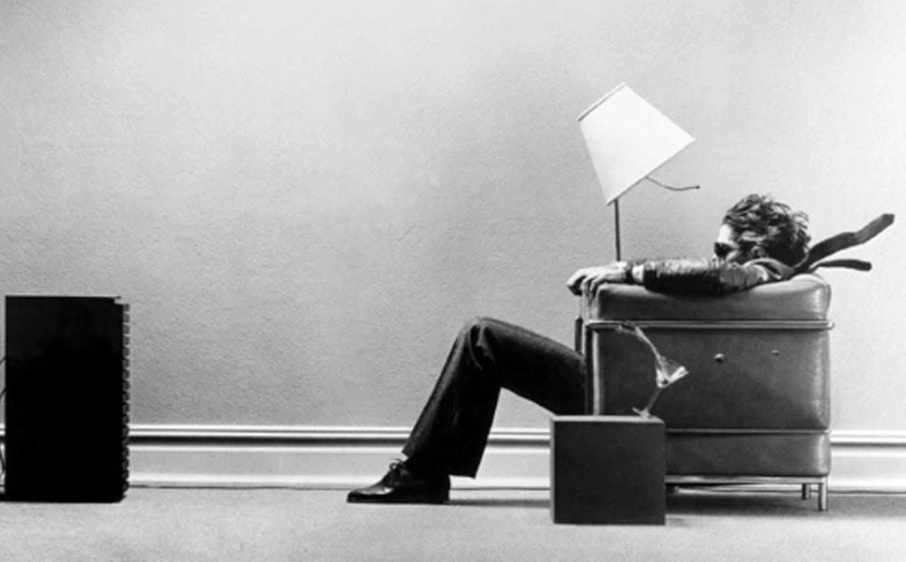
A Third Circle speaker is talking at people rather than with people.
Both First and Third Circle are off balance. Imagine trying to ski down a mountain: if you lean too far back (First Circle) or too far forward over your skis (Third Circle), you will fall. Whenever you learn a sport, you first learn the coordination system required for that sport. Your stance, balance, and breath alignment are taught first. You learn the reset point that is your touchstone. Until now, you may never have questioned your knee-jerk response to uncertainty. I’m telling you now, you have a choice. With awareness and breathing, you can choose your response to the unknown, the perpetual state of life.
If you are working with people who are unaware of their habitual responses to uncertainty and how their responses affect others, you are entangled in a push-pull relationship. This dynamic makes it very hard for you to truly collaborate, work well together under pressure, or even enjoy the process. So, what state are we in when we come together? Second Circle.

Second Circle = everyone in the game, engaged and in reality together.
In Second Circle, the Circle of Connection, you may feel as nervous as everyone else but choose not to self-protect because you know that being present in the situation means being equal to it. You respond fully to what is happening rather than to what you wish were happening. You are breathing and can read the room. With this awareness, you make the most effective decisions based on the moment’s reality. You are listening and willing to offer your ideas and build a shared agreement. First Circle pulls energy from the group; Third pushes too hard, while Second Circle enlivens the room and invites connection. In Second, you make others feel seen and heard. Second can be a calm, zen state; however, an energized Second Circle is also a powerful physical state. Soccer players running downfield as fast as they can are in Second together. Great athletes are often naturally in Second. Take a moment to think of hobbies you may have that put you in the zone, fully immersed in the present moment.
There is nothing wrong with First or Third Circles. They have their place. You may need to shut down or control a situation to survive. If you are an introvert, you may use First Circle to go inward and gather your energy to re-enter the world in Second. For introverts, First Circle can feel very comfortable, but it’s essential to understand how that affects those around you and know you have a choice. It is not a giant leap to move from First to Second. Adjust your posture, take a deep breath, make eye contact, challenge your mindset, and choose one that invites you into Second. Second Circle is an invitation to everyone that you are ready to connect. Please note that you will not shift someone out of First by coming at them in Third; this may push them deeper into First. I know this is true for humans and animals. If you know someone in Third, your only shot at connection is to remain firmly in Second yourself so you can draw them toward you.
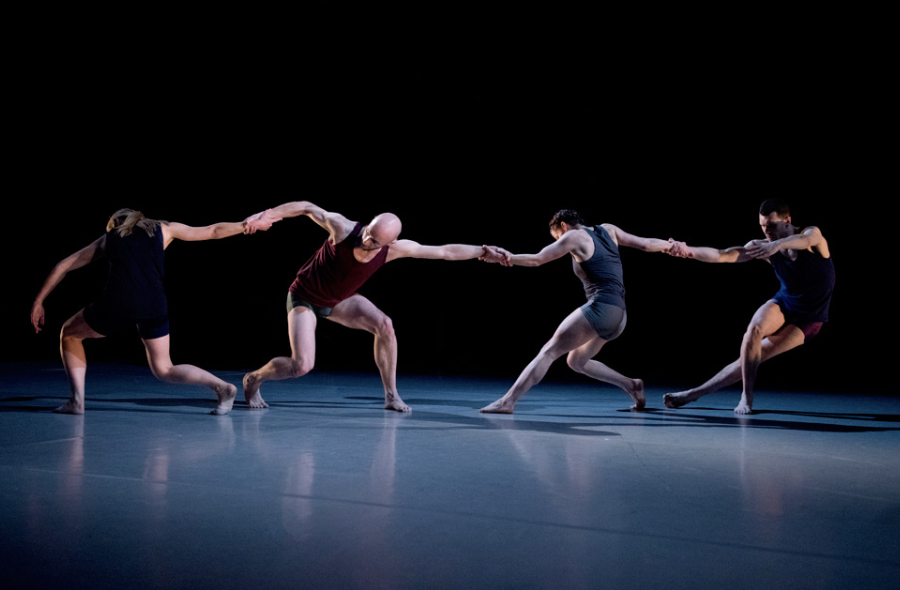
I want to add another layer to the foundation of Second Circle. Harriet Lerner writes about “Under and Over Functioning” in her book “The Dance of Anger.” Under-functioning and over-functioning are behavioral responses to anxiety that we may develop during our early formative experiences or be affected by our birth order in our family of origin.
Under-functioners become less competent under stress. You may freeze and want to be guided or rescued. (First Circle) Your thinking might sound like this:
“I’m confused.”
“I can’t help.”
“They will judge me.”
“Whatever I do will be wrong.”
“I need help.”
“I want this to be over.”
Know that being consistently confused or wanting to be rescued can be a patterned response to anxiety. If you can sense what Under-Functioning feels like in the body and know how to shift to Second Circle, you will connect better to others. It’s critical to make the mind-body connection. Your thinking is what creates a physical state of helplessness.
In contrast, over-functioners move quickly to rescue, give advice, or micro-manage to control their anxiety or overwhelm. (Third Circle) Your thinking might sound like this:
“I’ve got this.”
“I will fix it.”
“They are incapable.”
“I don’t need help. I help.”
“It’s up to me (once again).”
If you understand that wanting to control things can be a patterned response to anxiety, you may redirect yourself in the moment and find Second Circle. In Second, you will be able to read the room and be in balance of contributing and listening.
Under and over-functioning are armor protecting you from feeling vulnerable. These are simply patterned responses, not profound truths about who you are. You may realize that sometimes you default to under-functioning (First Circle) and sometimes to over-functioning (Third Circle). Take a moment to think about your default when you are in uncertainty. Do you shift to First Circle or Third? Not in your best moments, but when you start feeling anxious or uncertain about what to do next.
Since 2005, I have been teaching Second Circle to the improv community. I have always identified with First Circle (Under-Functioning) as my default when I’m not my best-balanced self in an improv show. However, when the COVID-19 Pandemic hit in March 2020, my response to anxiety and the unknown was as follows: I applied for a business loan, refinanced our home, moved all of our in-person training to virtual training, started training with a new company and helped put their training online, oversaw my website redo, filmed a web series, finished my improv book, re-organized my house thoroughly, wallpapered the guest bathroom and kitchen, and repainted a bathroom along with the insides of all of our closets and cabinets. Since I thought my husband was moving too slowly (he wasn’t - this was just my anxiety), I also completed the tasks on his to-do list. So, I’m a real-life over-functioner. I relish bringing order to chaos, and when I look back over my life, significant achievements are due to my over-functioning. Yet, when my husband compliments me on being strong and able to accomplish so much, instead of smiling and saying thank you, I either feel resentment bubble up or burst into tears. This reaction tells me how off-balance I’ve been. Logically, I understand that being in Second Circle when under pressure will enable me to stay connected to those around me and collaborate. However, when real-life anxiety washes over me without awareness, I tend to default to the over-functioner.
We all need to develop a calm practice to avoid defaulting to patterned behavior that may not be the best for the situation. Brene Brown defines calm as “perspective, mindfulness, and the ability to manage emotional reactivity.” This definition also describes Second Circle. Calm people bring perspective to complicated situations. The feeling of calm is just as contagious as anxiety. When heading into a meeting, ask yourself, do you want to inject your team with anxiety or calm?
To connect successfully when you speak, you want to be in Second Circle. You want to be aware of your habitual response to uncertainty, understand the thinking that pulls you into First and Third, and know how to find and sustain Second Circle
In essence, your ability to read a room, adjust, connect, and have an impact relies on your shift from your Self 1 (First & Third Circle) to Self 2 (Second Circle).
Jo
www.333-communications.com