“An excessive need to be ME.”
When I first meet someone in the small group 2-Day speaking intensive, I already have a sense of what I will coach them toward. Before we get to the coaching, I give them an overview of this brain-based coaching, then film them to capture an excerpt of their speaking pattern. Then, I give them the Criteria of brain-based speaking, so when we look at their first film together, they will have something to base their critique on. I see their strengths first. I already know what I’m not going to touch, but what we are building upon.
Most of the time, the very first area we need to address is that they are not speaking in sentences. They fragment, ramble, and compose while talking, which makes my job as a listener incredibly tedious. When we start the second filming, when I’m coaching them, we are trying to get them to sentences and disrupt their speaking habit. No, they aren’t saying Um a thousand times because they don’t know what they are saying; they are saying Um a thousand times because that’s their habit. Everyone’s doing it now, and it’s not great.
When I first met this person, I didn’t think, “Wow! I love the way they say Um! Let’s keep that as is.” I thought, “great vocal tone, nice facial expression and gestures, but wow, it’s hard to follow what they are saying because they are fragmenting so severely.”
We then go through a very simple, yet profound stage of delivering sentences to my mind, not the ceiling, but to me, their listener. I need them to get some control before we get back to conversational tempo and add in other elements.
This stage is key, but is sometimes where people stay stuck because they cannot bear not to be their “authentic selves,” aka their habit pattern. I can push, cajole, and invite them to get off their case and let themselves learn the skill because I know on the other side of this is the best of themselves. Without the foundation of sentences, their expression flies around the room in a discharge of loose, untargeted delivery.
Can you let go of your persona long enough to realize that it is not who you are, but what you are doing, and that what you are doing is getting in the way of your listeners’ experience of you?
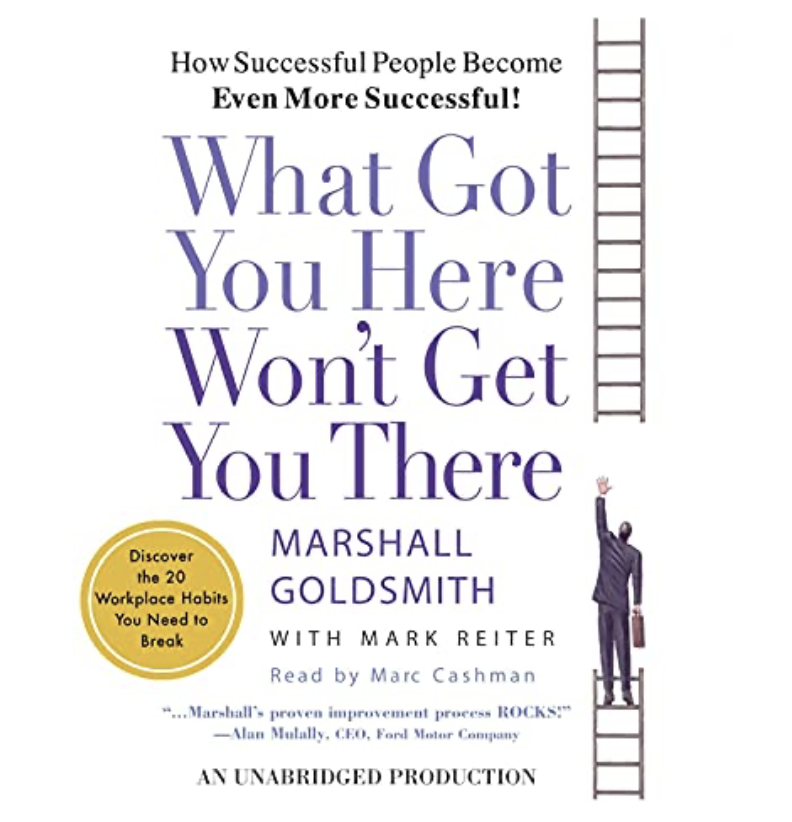
"An excessive need to be me" is a behavioral flaw identified by Marshall Goldsmith in What Got You Here Won't Get You There, where individuals cling to negative behaviors by justifying them as their "authentic" or "unalterable" self. It is a form of "That's just the way I am," which hinders personal growth and leadership effectiveness. This habit is one of the twenty "habits that hold you back from the top," which often prevent successful people from moving to the next level.
Key details about this concept:
Definition: It is the tendency to turn flaws into virtues, rationalizing counterproductive actions (e.g., being rude, failing to listen, fragmenting when speaking) as part of one's identity.
The Trap: It prevents change by convincing people that improving their behavior makes them a "phony".
Impact: This habit often causes people to neglect necessary changes because they are too attached to their "true" self, even if that self is dysfunctional in a professional setting.
The Solution: Marshall Goldsmith suggests that for leaders, the need to be "we" (supportive of the team) must take priority over the need to be "me". Success comes from focusing on others and shedding the rigid, often false, definition of self.
It’s Not About YOU!
In my speaking coaching, the biggest transformations come from those who stop focusing on themselves as speakers and learn to speak in a way that makes it effortless for their listeners to absorb what they are saying. When you care about your listener and learn what they need from you as a communicator, the path is clear. Letting go of old habits that get in the way of being the best of you in communication is key. Be of service to your listener’s minds. They are giving you their time and attention, the most precious things they own. Make it worth their while. Be easy to listen to and easy to absorb your message.
Let me repeat the trap of hanging onto your habit patterns. It prevents change by convincing people that improving their behavior makes them a "phony”.
What I love about teaching improvisation is that, ultimately, I am teaching the ability to tolerate failure, rather than be terrified of it or pretend that it isn’t an inevitable part of most developmental and creative processes. That can be very useful. As you get older, you don’t necessarily become looser. Sometimes, you can be entrenched in a persona that you created. The perfectionists I know struggle the most to let go and therefore change the status quo. If this rings true for you, run, don’t walk, to an improv class and challenge yourself to let go of control.
Tolerating Discomfort:
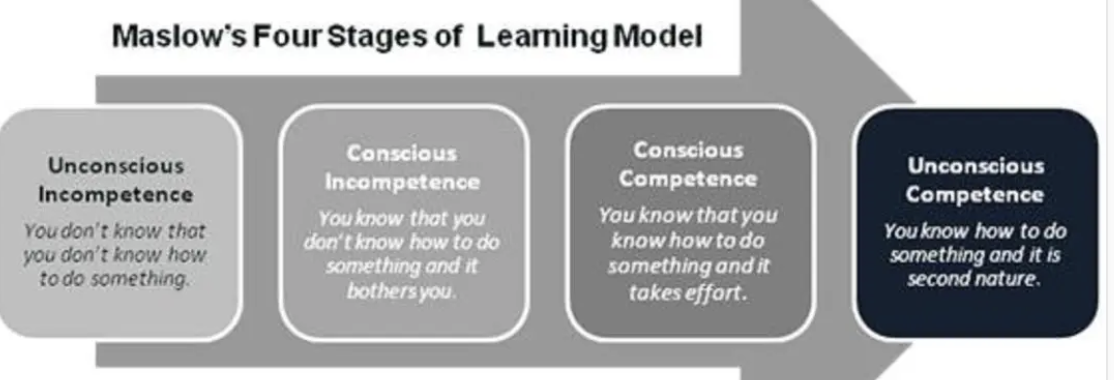
Knowing there are natural stages of learning may help you stick it out when you are learning something new or disrupting an old habit pattern. I was first made aware of these stages through Carol Hazenfield, one of my first improv teachers. A good teacher helps you recognize your blind spots and supports you throughout the learning stages, and Carol was one of the best.
Stage one, called unconscious incompetence, occurs at the beginning of learning. You don’t know what you don’t know, and therefore, all new information is welcomed. Like all ignorance, this is blissful. Another critical part of this stage is to see the value of the new skill before you move on to it. If you understand why you need to learn what you are learning, you are more likely to endure the rough patches.
The next stage, conscious incompetence, can be the most painful. When you are conscious of your incompetence, you know your shortcomings and are very aware of how much work lies ahead. At this point, you must give yourself credit for your growth; after all, it’s only after you’ve learned the fundamentals that you become aware of your shortcomings. Now, you have tools to help you advance your work. This can be the stage where people quit. It's uncomfortable, and there is a lot of practice ahead. If you have a clear WHY you are doing this in the first place, it can help you push through.
In the next stage, called conscious competence, students often feel they’ve reached a plateau and are no longer improving. Competence comes more easily, and you succeed more often. Savor this phase a bit because from then on, learning will come in smaller increments and be even harder to measure.
Unconscious competence, the final stage, is the bliss state where you no longer use your conscious mind to make choices. The more you think or try, the less likely you will be to reach this phase of letting go. It involves trusting what you know will be expressed if you stay out of the way. Welcome to the flow, or the zone. This is the fun state for athletes, and for speakers, this is when you can truly deliver your content to your listeners’ minds without wondering if you are speaking in sentences. The longer you practice correctly, the more you will shift between conscious and unconscious competence.